What does the Elite 100 V2 offer on paper?
The BLUETTI Elite 100 V2 holds 1024 Wh and costs $499.00 new at BLUETTI. BLUETTI rates its continuous AC output at 1800 W. The battery uses lithium iron phosphate (LFP) chemistry.
It has 4 AC outlets. Continuous output is the figure to compare against the combined wattage of every appliance you intend to run simultaneously.
| Power and capacity | |
|---|---|
| Battery capacity | 1024 Wh |
| Battery chemistry | LFP |
| Continuous AC output | 1800 W |
| Wall charging input | 1200 W |
| UPS switchover (max) | 10 ms |
| Pass-through charging | Yes |
| Expandable | No |
| Solar charging | |
| Max solar input | 1000 W |
| Lowest solar voltage | 12 V |
| Max solar voltage | 60 V |
| Max solar current | 20 A |
| Ports | |
| AC outlets | 4 |
| Size and moving it | |
| Length | 12.6 in |
| Width | 8.5 in |
| Height | 9.8 in |
| Weight | 25.3 lb |
| Screen, app and light | |
| App over Bluetooth and Wi-Fi | Yes |
| Temperature and warranty | |
| Charging, lowest | 0 °C |
| Charging, highest | 40 °C |
| Use, lowest | -20 °C |
| Use, highest | 40 °C |
| Product | Best current price | Watt-hours per dollar | Value rank |
|---|---|---|---|
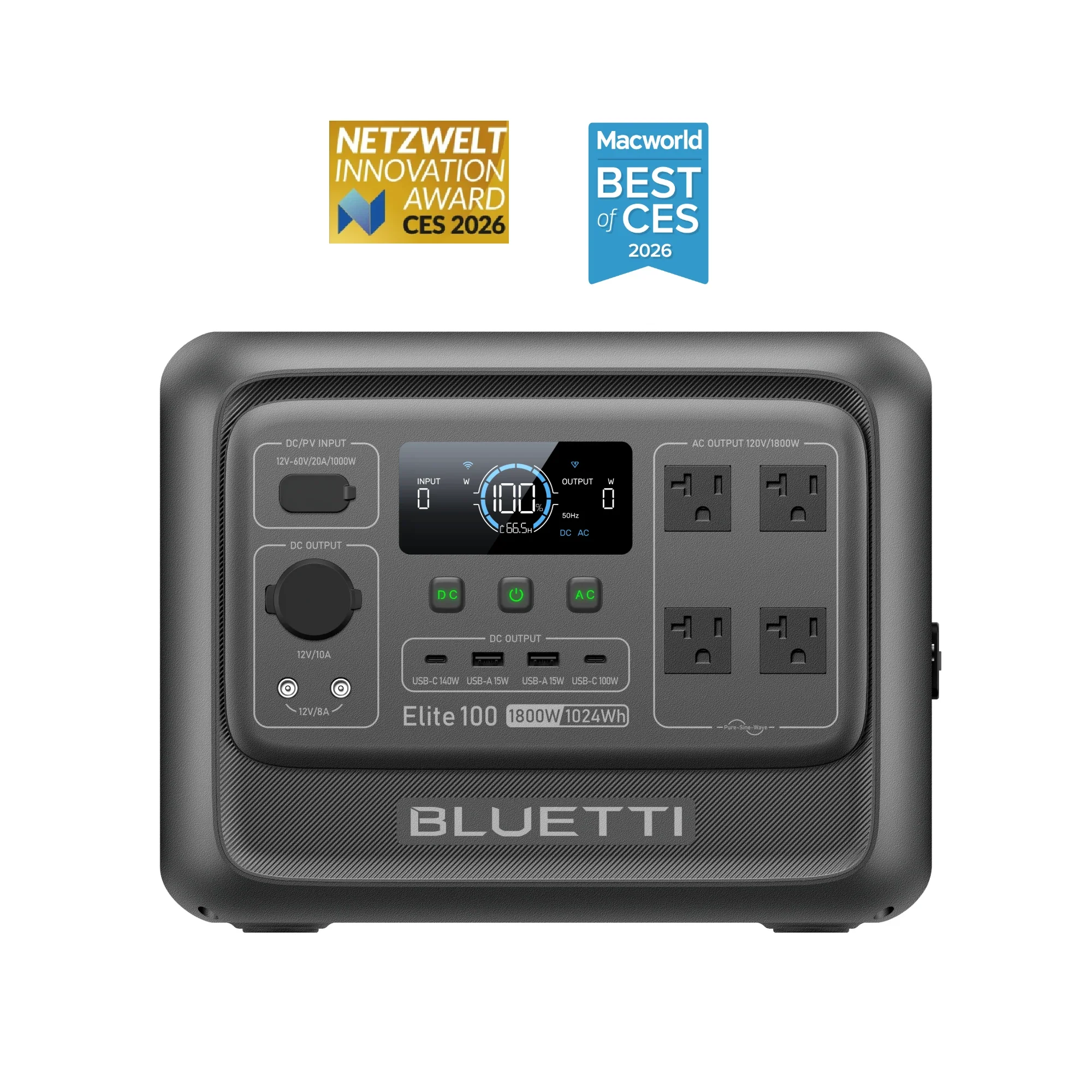 BLUETTI Elite 100 V2 | $499.00 at BLUETTI | 2.05 Wh/$ | #2 of 4 |
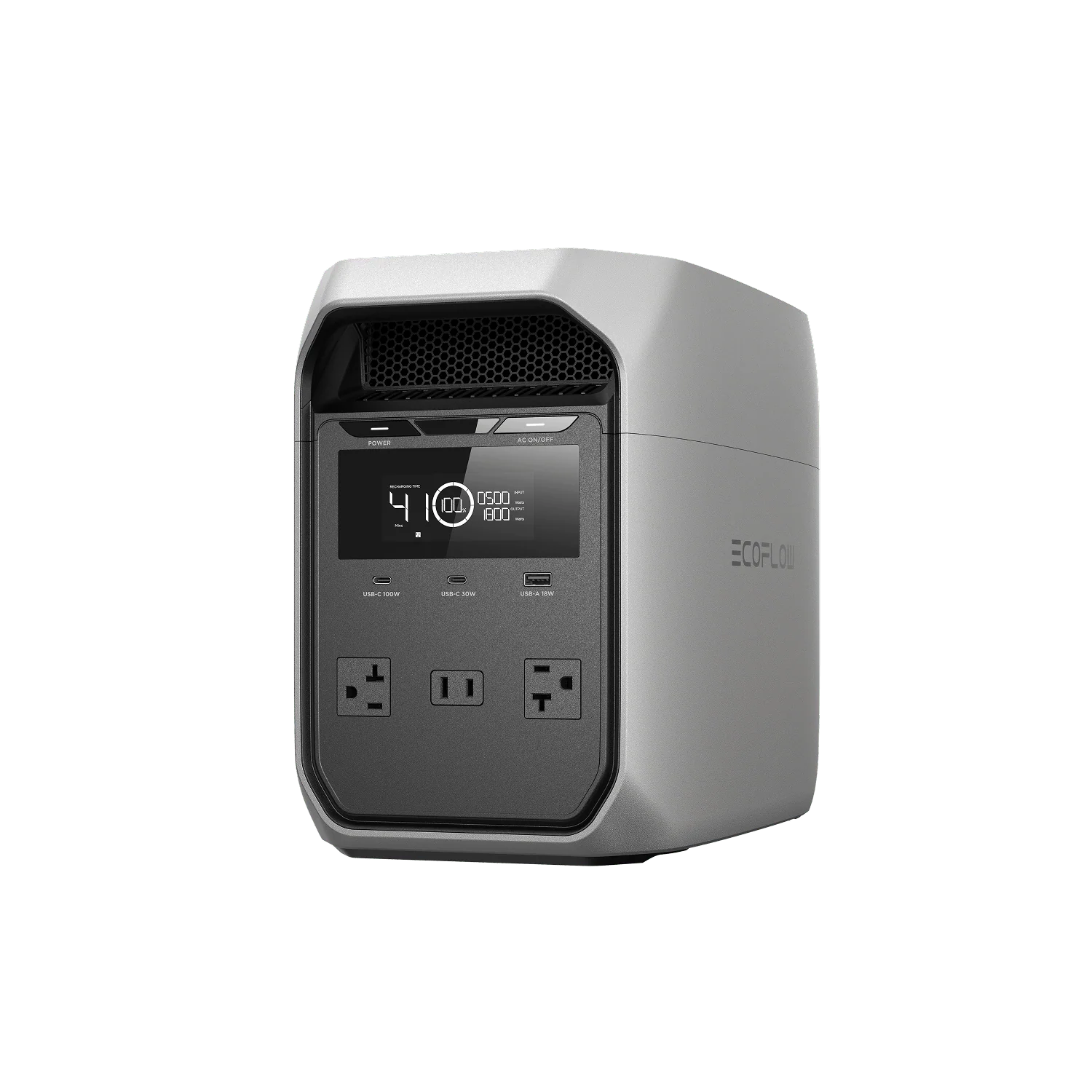 EcoFlow DELTA 3 Classic | $499.00 at EcoFlow | 2.05 Wh/$ | #3 of 4 |
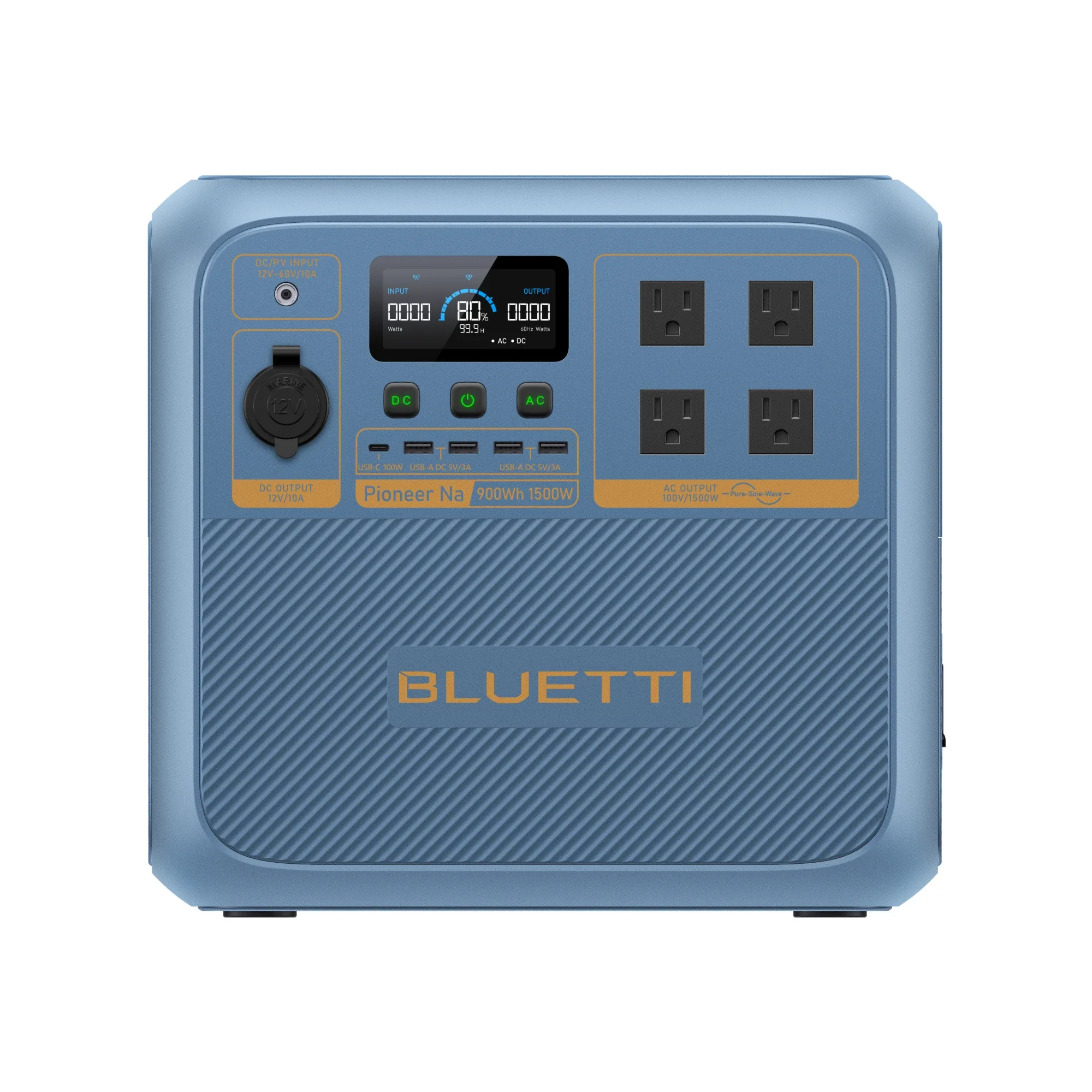 BLUETTI Pioneer Na(Sodium) | $700.00 at BLUETTI | 1.29 Wh/$ | #4 of 4 |
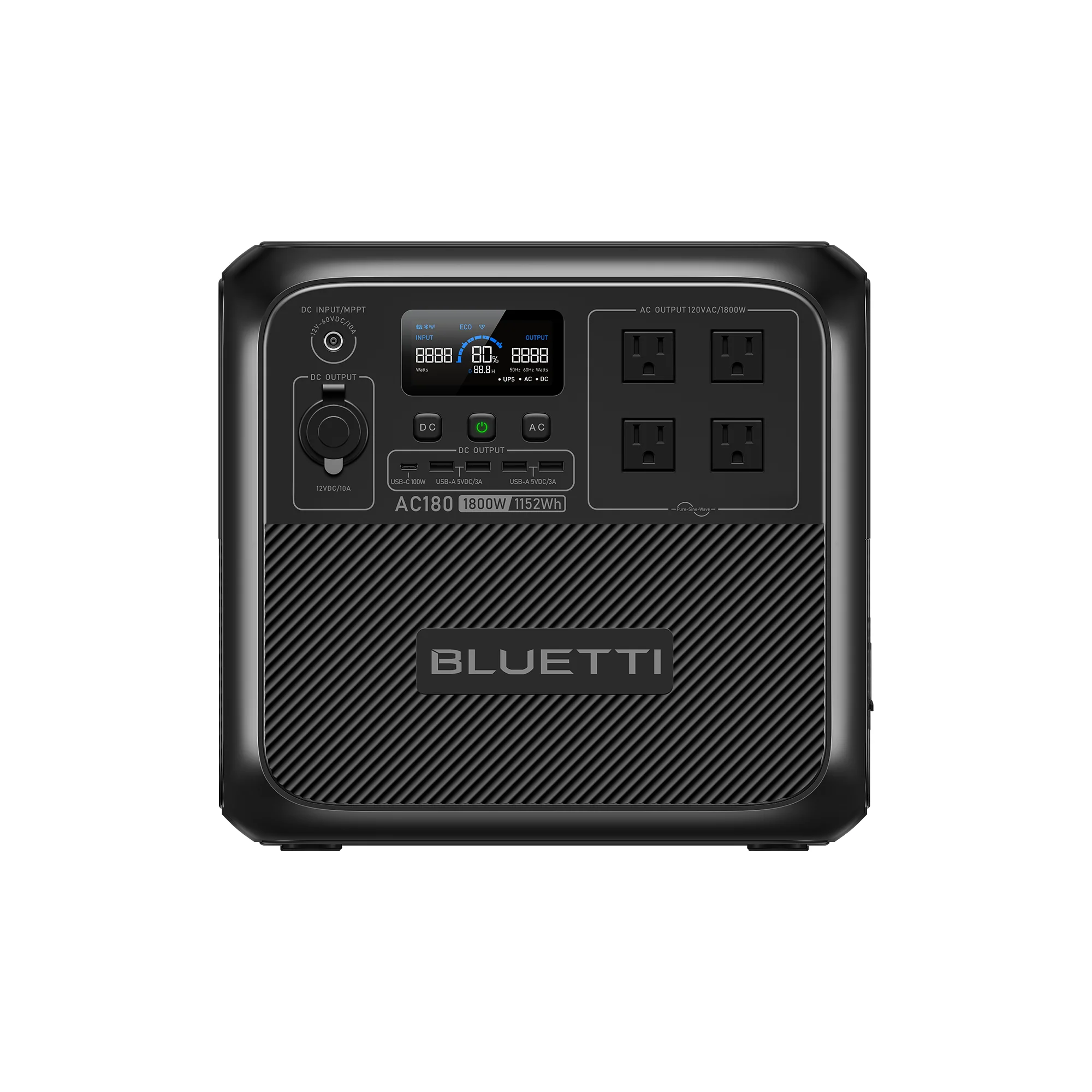 BLUETTI AC180 Solar | $499.00 at BLUETTI | 2.31 Wh/$ | #1 of 4 |
How heavy is it, and how big?
BLUETTI lists the Elite 100 V2 at 25.3 lb. That weight places it in the easy to carry (under 30 lb) class.
Its dimensions are 12.6 in long, 8.5 in wide and 9.8 in tall.
How fast does it charge from the wall?
BLUETTI lists 80 percent from the wall in 45 minutes. Its AC charging input is rated at 1200 W.
How much solar input does it take?
BLUETTI rates solar input at up to 1000 W. At that full 1000 W, the calculated best case for a full solar refill is 1.0 hours.
Clouds, short winter days and panel angle all cut what panels deliver, so real refill times run longer than the best case.
Does it support pass-through charging, and how fast is switchover?
The Elite 100 V2 supports pass-through charging (yes). BLUETTI rates its switchover at 10 ms at most.
That figure belongs in the 20 ms or less group for UPS switchover speed. If a desktop computer or router needs to stay on when the grid drops, switchover speed is the spec to compare.
Is the price fair for what you get?
At $499.00, the Elite 100 V2 works out to 2.05 Wh/$ and ranks #2 of 4 on value in this article. Only the AC180 Solar ranks higher, at #1 of 4 with 2.31 Wh/$.
A value figure counts stored energy only, so compare it alongside continuous output, solar input and overall weight.
Where is it strong, and where does it fall short?
The limits that stand out are that it does not charge below 0 °C and it cannot add batteries. On the plus side, BLUETTI rates it to supply power from -20 °C up to 40 °C.
Its maximum charging temperature is also 40 °C, according to BLUETTI.
Who should buy the Elite 100 V2?
It fits a buyer who wants 1024 Wh and 1800 W of output in a 25.3 lb unit for $499.00, and who accepts that it cannot add batteries. If you expect freezing weather, the 0 °C charging limit is the spec to check.
How close is the DELTA 3 Classic?
Very close on paper: the EcoFlow DELTA 3 Classic also holds 1024 Wh, also rates 1800 W of AC output and also costs $499.00. Both work out to the same 2.05 Wh/$, so the Elite at #2 of 4 and the DELTA 3 Classic at #3 of 4 carry no value gap. EcoFlow also lists 80 percent from the wall in 45 minutes, the same figure BLUETTI gives.
EcoFlow rates solar input up to 500 W, while BLUETTI rates the Elite up to 1000 W. The EcoFlow weighs 26.6 lb, against 25.3 lb for the Elite. EcoFlow lists a surge rating of 3600 W and a warranty of 5 years, that is 3 years as standard, plus 2 more when you register it in the EcoFlow app.
What sets the Pioneer Na(Sodium) apart?
It uses a sodium-ion battery, while the Elite uses lithium iron phosphate (LFP) chemistry. BLUETTI rates the Pioneer Na(Sodium) to charge down to -15 °C. The Elite, by contrast, does not charge below 0 °C.
It costs $700.00 against $499.00 for the Elite, and holds 900 Wh against 1024 Wh. On value it ranks #4 of 4, at 1.29 Wh/$. It is also heavier, at 35.3 lb compared with 25.3 lb for the Elite.
BLUETTI rates its continuous AC output at 1500 W. BLUETTI gives it a warranty of 3 years.
Why pick the AC180 Solar instead?
The BLUETTI AC180 Solar ranks #1 of 4 on value at 2.31 Wh/$, with 1152 Wh for $499.00. The trade-offs are weight, solar input and switchover, starting with 36.16 lb against 25.3 lb for the Elite 100 V2. BLUETTI rates its solar input up to 500 W, against up to 1000 W for the Elite.
BLUETTI rates its switchover at 20 ms at most, compared with 10 ms for the Elite. It carries a warranty of 5 years and a surge rating of 2700 W.