Which portable power station here gives the most battery per dollar?
The Elite 400 ranks #1 of 6 on value, at 2.74 Wh/$. BLUETTI sells it for $1,399.00, and its battery holds 3840 Wh. Second is the AC180 Solar at #2 of 6 with 2.57 Wh/$, and the Elite 300 follows at #3 of 6 with 2.51 Wh/$.
The Elite 200 V2 lands at #4 of 6. Its value figure is 2.31 Wh/$. The EcoFlow units close the list: the DELTA 3 Ultra Series is #5 of 6 at 2.28 Wh/$, and the DELTA 2 Max is #6 of 6 at 1.99 Wh/$.
Value here means battery size for the price, not how much power comes out at once. The Elite 400, Elite 300, Elite 200 V2, DELTA 3 Ultra Series and DELTA 2 Max all use LFP cells. Each model on this page lists a warranty figure of 5 years, and the DELTA 3 Ultra Series section below gives its condition.
| Product | Best current price | Watt-hours per dollar | Value rank |
|---|---|---|---|
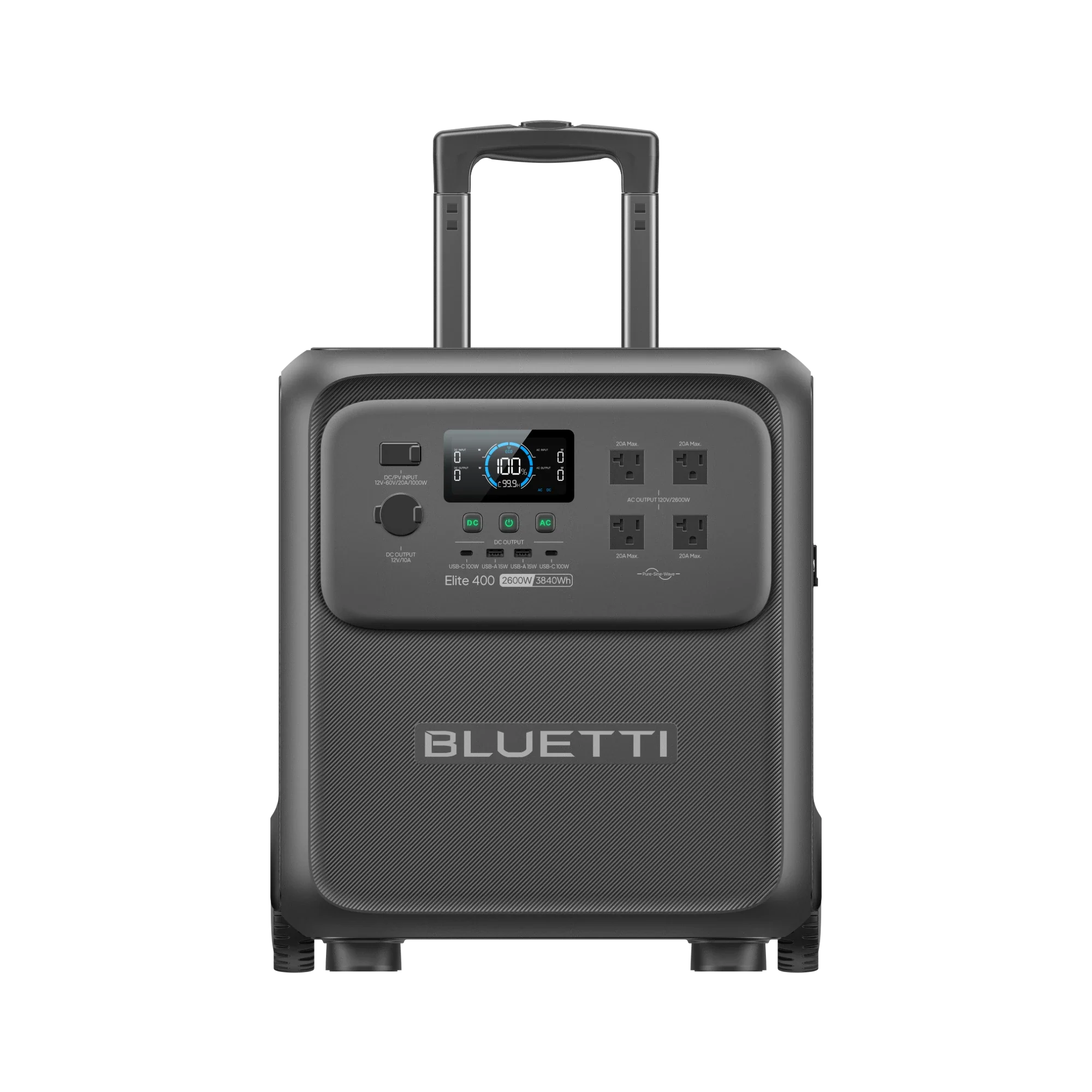 BLUETTI Elite 400 BLUETTI Elite 400 | $1,399.00 at BLUETTI | 2.74 Wh/$ | #1 of 6 |
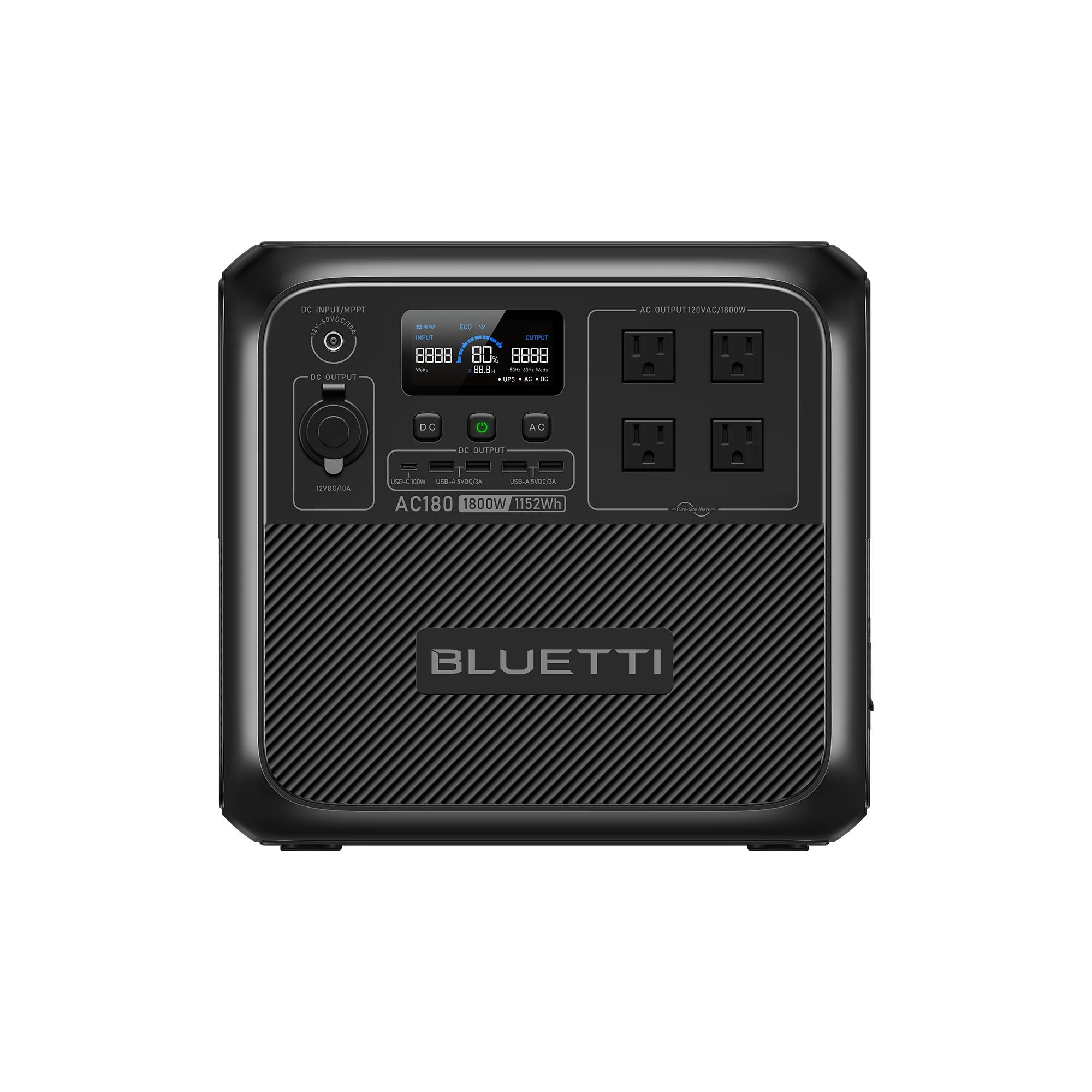 BLUETTI AC180 Solar BLUETTI AC180 Solar | $449.00 at BLUETTI | 2.57 Wh/$ | #2 of 6 |
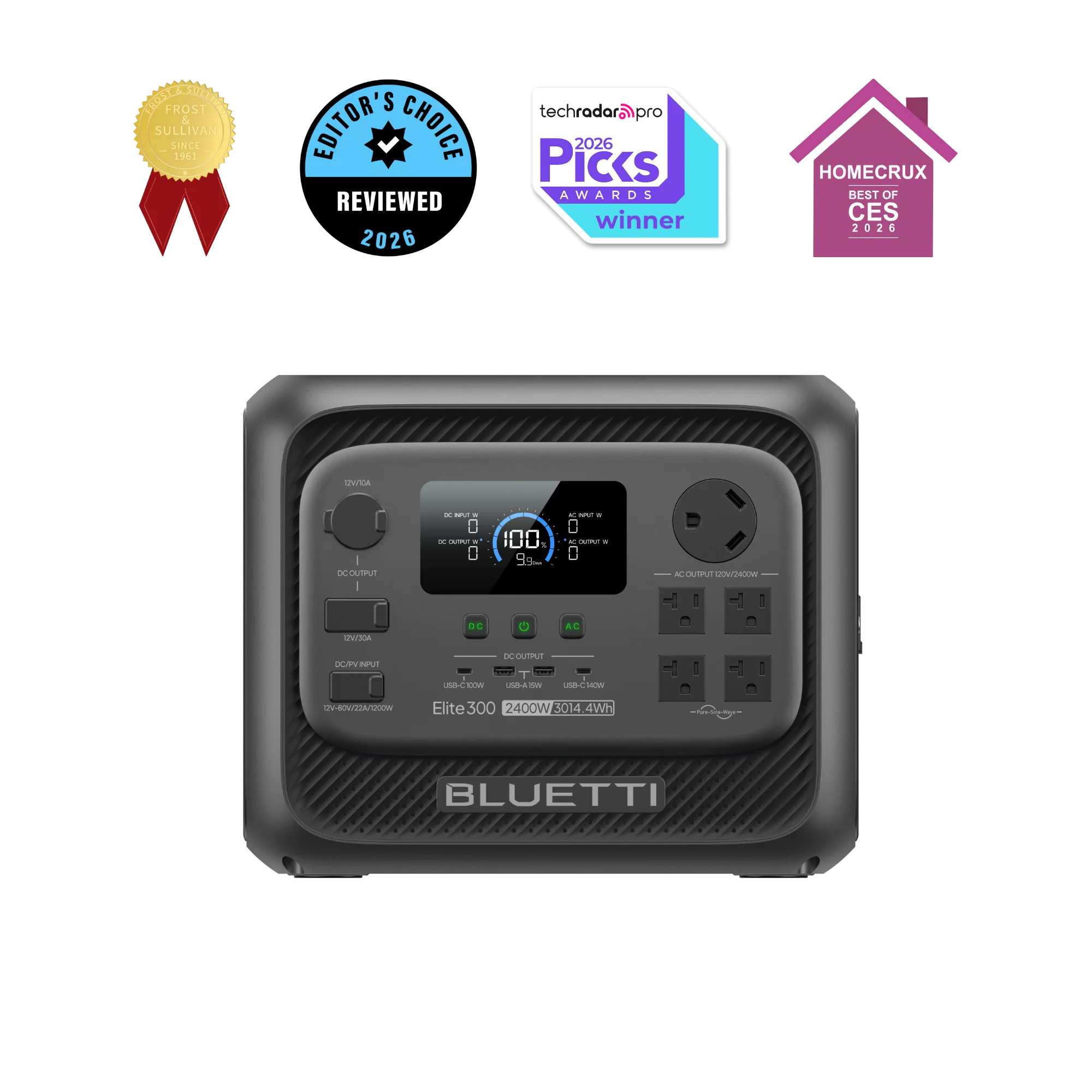 BLUETTI Elite 300 BLUETTI Elite 300 | $1,199.00 at BLUETTI | 2.51 Wh/$ | #3 of 6 |
 BLUETTI Elite 200 V2 BLUETTI Elite 200 V2 | $899.00 at BLUETTI | 2.31 Wh/$ | #4 of 6 |
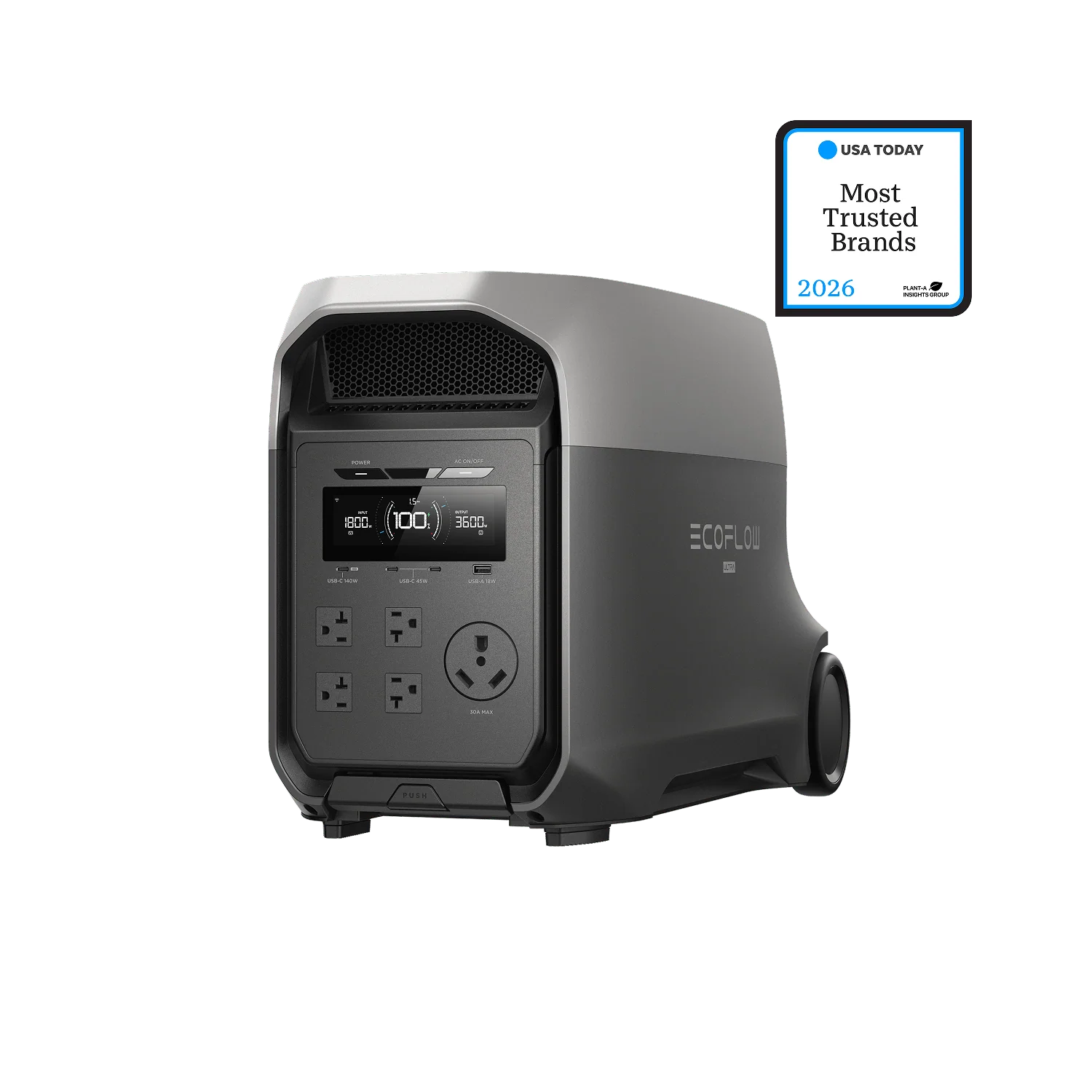 EcoFlow DELTA 3 Ultra Series EcoFlow DELTA 3 Ultra Series | $1,349.00 at EcoFlow | 2.28 Wh/$ | #5 of 6 |
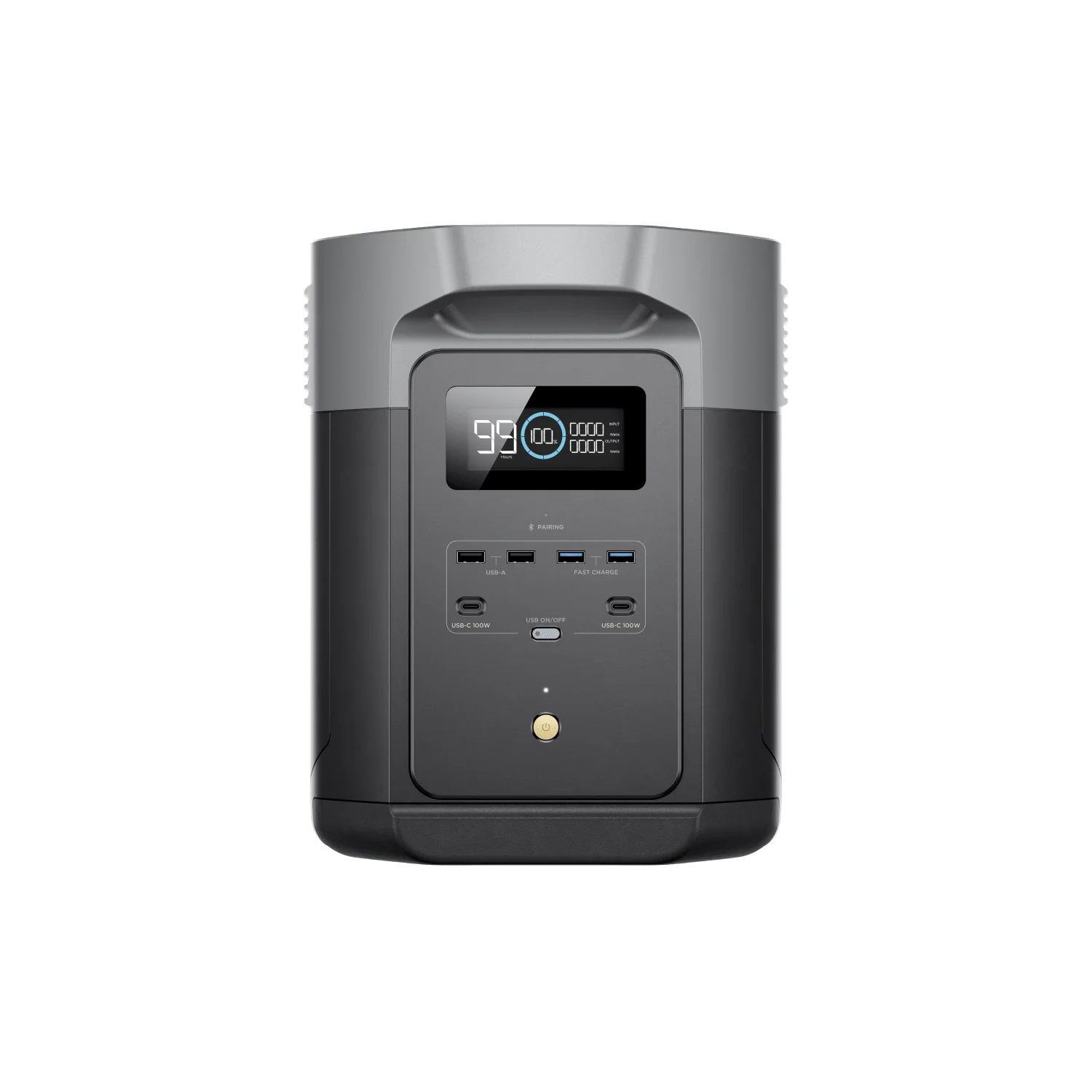 EcoFlow DELTA 2 Max EcoFlow DELTA 2 Max | $1,029.00 at EcoFlow | 1.99 Wh/$ | #6 of 6 |
Does this page list how much power a Starlink dish draws?
No, this page has no Starlink power figure, so check the dish's own rating before you choose. Find the watt rating in your dish's own documentation or on its label.
Then rule out any unit below whose continuous AC output is lower than that number. Leave room for the laptop, phone or light you also plan to plug in.
How big and heavy is the Elite 400?
The Elite 400 weighs 85.98 lb and measures 19.3 in tall, 16.8 in long and 11.3 in wide. That puts it in the heavy (over 50 lb) class. To move it, BLUETTI gives it a pull-out handle and wheels.
It has the largest battery in this group at 3840 Wh, next to 3072 Wh for the DELTA 3 Ultra Series, 3014 Wh for the Elite 300, 2073.6 Wh for the Elite 200 V2, 2048 Wh for the DELTA 2 Max and 1152 Wh for the AC180 Solar. The inverter is rated for 2600 W of continuous AC output, with a power lifting rating of 3900 W. Its screen is readable in direct sunlight.
App control over Wi-Fi and Bluetooth is listed as yes. Ports include 4 AC outlets, 2 USB-A ports, 2 USB-C ports and 1 car port. Solar input is rated for up to 1000 W through an xt60 plug, and the fastest full solar refill at that input is 3.8 hours.
Strengths
- Large-load output: 2000 W or more of continuous AC output
- UPS switchover speed: 20 ms or less
- Moving it: pull-out handle and wheels
- Screen: readable in direct sunlight
Gaps
- Weight class: heavy (over 50 lb)
- Charging in freezing weather: does not charge below 0 °C
- Battery expansion: cannot add batteries
- Built-in light: none
What does the AC180 Solar cost?
The AC180 Solar costs $449.00 at BLUETTI, the lowest price here, next to $899.00 for the Elite 200 V2, $1,029.00 for the DELTA 2 Max, $1,199.00 for the Elite 300, $1,349.00 for the DELTA 3 Ultra Series and $1,399.00 for the Elite 400. For that price you get 1152 Wh of battery. BLUETTI rates it for 1800 W of continuous AC output and a surge of 2700 W.
Panels plug in through a dc7909 connector, and solar input is rated for up to 500 W. Its quickest full solar refill at that input is 2.3 hours. The UPS switchover is listed at 20 ms at most.
Strengths
- UPS switchover speed: 20 ms or less
How much solar does the Elite 300 take in?
The Elite 300 is rated for up to 1200 W of solar input, the highest here, next to 1000 W for the Elite 400, Elite 200 V2 and DELTA 2 Max, 800 W for the DELTA 3 Ultra Series and 500 W for the AC180 Solar. At that input, BLUETTI's fastest full solar refill is 2.5 hours. The maximum input is listed at up to 60 V and 22 A.
Use with third-party panels is listed as yes. Real solar refill times depend on the sun, the weather and the angle of the panels. Its battery holds 3014 Wh, and the unit weighs 57.98 lb.
Continuous AC output is 2400 W. Pass-through use is listed as yes, and the UPS switchover is listed at 10 ms at most.
Strengths
- Large-load output: 2000 W or more of continuous AC output
- UPS switchover speed: 20 ms or less
Gaps
- Weight class: heavy (over 50 lb)
- Charging in freezing weather: does not charge below 0 °C
- Battery expansion: cannot add batteries
- Built-in light: none
How quickly does the Elite 200 V2 charge from the wall?
BLUETTI lists a turbo AC charge time of 1.4 hours for the Elite 200 V2. Standard mode is listed at 1.6 hours, and silent mode at 3 hours. The AC input is rated at 1800 W.
On solar, it accepts up to 1000 W, and the listed charge time at that input is 2.4 hours. Inside is a 2073.6 Wh battery. At 53.35 lb, this model is in the heavy (over 50 lb) class.
BLUETTI rates its inverter at 2600 W continuous, with power lifting listed at 3900 W.
Strengths
- Large-load output: 2000 W or more of continuous AC output
- UPS switchover speed: 20 ms or less
Gaps
- Weight class: heavy (over 50 lb)
- Charging in freezing weather: does not charge below 0 °C
- Battery expansion: cannot add batteries
- Built-in light: none
What output is the DELTA 3 Ultra Series rated for?
The DELTA 3 Ultra Series is rated for 3600 W of continuous AC output and a 7200 W surge. That 3600 W is the highest continuous rating here, next to 2600 W for the Elite 400 and Elite 200 V2, 2400 W for the Elite 300 and DELTA 2 Max, and 1800 W for the AC180 Solar. Surge ratings matter for motors and pumps that pull extra power when they start.
This unit holds 3072 Wh, weighs 72.1 lb and stands 24.6 in tall. Solar comes in through 2 ports with xt60i plugs, rated for up to 800 W. EcoFlow puts the fastest full solar refill at 3.8 hours.
The warranty is 5 years, that is 3 years as standard, plus 2 more when you register it in the EcoFlow app.
Strengths
- Large-load output: 2000 W or more of continuous AC output
- UPS switchover speed: 20 ms or less
Gaps
- Weight class: heavy (over 50 lb)
- Charging in freezing weather: does not charge below 0 °C
Does the DELTA 2 Max take extra batteries?
Yes, the DELTA 2 Max is listed as one that can add batteries, while the Elite 400, Elite 300 and Elite 200 V2 each cannot add batteries. Its own battery holds 2048 Wh, and EcoFlow sells it for $1,029.00. Add-on batteries let you grow storage later instead of buying a bigger unit now.
The DELTA 2 Max has 6 AC outlets, more than the 4 on each of the Elite 400, Elite 300 and Elite 200 V2. It also has 4 USB-A ports, 2 USB-C ports and 1 car port. Solar input is rated for up to 1000 W, and there are 2 ports.
Its solar limits are set per_input: up to 60 V and 15 A on each input. The fastest full solar refill is 2.0 hours. It weighs 50.7 lb, in the heavy (over 50 lb) class, and lists a 4800 W surge.
Strengths
- Large-load output: 2000 W or more of continuous AC output
- UPS switchover speed: 20 ms or less
- Battery expansion: can add batteries
Gaps
- Weight class: heavy (over 50 lb)
- Charging in freezing weather: does not charge below 0 °C
Which of these models charge in freezing weather?
None of the models with a charging limit listed charges in freezing weather: the Elite 400, Elite 300, Elite 200 V2, DELTA 3 Ultra Series and DELTA 2 Max are each rated so the unit does not charge below 0 °C. This page has no charging temperature for the AC180 Solar.
When running (discharging), the Elite 400, Elite 300 and Elite 200 V2 are rated down to -20 °C, while the DELTA 3 Ultra Series and DELTA 2 Max are rated down to -10 °C. If your setup sits outside in winter, plan to charge the battery somewhere warm.
How do you choose among these models?
Start with the watt rating on your dish's own label, since this page has no Starlink figure. Add the other things you plan to run at the same time. Then rule out any unit whose continuous AC output is below that total.
Next, think about how many hours you need between charges, and size the battery for that. If you will refill from panels, the solar input rating caps how fast that refill can go. Weight matters if the unit rides in a car or gets carried to a campsite.
Last, look at the value figures to see how much battery each dollar buys.